
Key Takeaways:
- Spotting an ant or two indoors usually isn’t concerning. Isolated sightings are often just ants exploring, but continuous activity or ants getting into food can point to a nest hidden somewhere in the home.
- How worried you should be often depends on where the ants are appearing inside your house.
- Most common household ants are more of an annoyance than a danger, though Carpenter Ants and Fire Ants are important exceptions.
- Winged ants, wood debris, or ants discovered in seldom-used spaces like attics are strong warning signs that professional ant control should be contacted promptly.
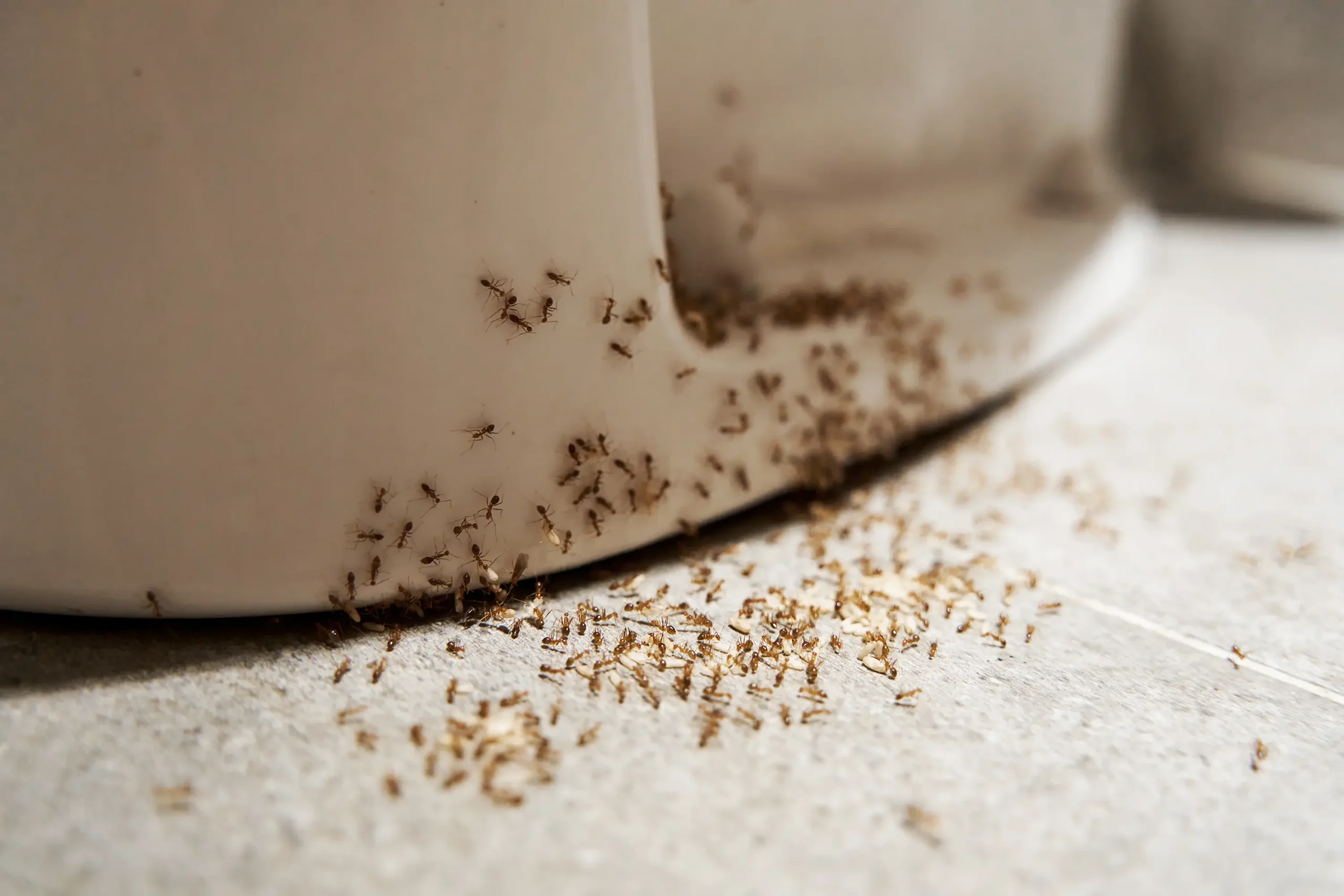
Whether ants in your house are a minor inconvenience or a sign of a larger issue depends on the details of the activity. Seeing a single ant crawl across your counter can be unsettling, but it doesn’t automatically indicate a serious problem. In many cases, ants are simply passing through. However, frequent sightings or noticing ants in unusual areas may be hints that there’s a hidden colony.
This guide is meant to help you tell the difference between harmless ant activity and situations that call for action, so you know when basic cleaning is enough and when it’s time to bring in professionals.
Consider Your Ant Issue on a Numbered Scale
When ants show up indoors, the most important question is whether they’re just searching for food or have already established a nest. Answering this question helps determine what your next steps should be.
If you live in Pennsylvania, occasional ant sightings aren’t uncommon. Instead of reacting immediately, think of the situation on a scale from 1 to 10, where 1 means “barely an issue” and 10 means “urgent professional help needed.”
Level 1-3 (Low Risk)
At this stage, ants are typically a mild nuisance rather than a serious problem. Some homeowners may hardly notice them, while others find them mildly irritating but manageable.
- What you might see: A lone scout ant near a window, door, or baseboard, or a short trail that appears briefly after heavy rain or extreme heat. These sightings are usually infrequent and short-lived.
- Who they’re likely to be: Common nuisance ants such as Pavement Ants or Odorous House Ants. These species aren’t aggressive and don’t damage structures, though they’re attracted to food and moisture.
- What to do: Keep an eye on things. Wipe down surfaces, eliminate crumbs, and watch for repeated activity. In many cases, the ants will disappear without further action.
Level 4-7 (Consider Professional Treatment)
At this level, ants are no longer rare visitors. Even homeowners who are usually tolerant of pests may find the situation difficult to ignore. Potential issues include cleanliness, food contamination, and persistent activity.
- What you might notice: Ants appearing daily, or several times a day, inside food containers, on dishes, or consistently around sinks and countertops.
- What it often means: There’s likely a hidden “satellite colony” inside wall voids, cabinets, or other enclosed areas. At this point, the ants aren’t just foraging, they’ve established themselves indoors.
- What to do: Store-bought sprays may reduce visible ants but won’t reach the nest. Baits can help, but if activity continues, professional ant control is usually the most effective way to stop the problem and protect your home and food.
Level 8–10 (Reach Out for Advice Immediately)
At the high end of the scale, ant activity may be creating serious risks, including structural damage or safety concerns.
- Who it may be: Large black ants such as Carpenter Ants, or aggressive red to reddish-brown ants like Fire Ants.
- Warning signs: Winged ants indoors, which suggest a mature colony, or small piles of sawdust-like material near baseboards are common indicators of Carpenter Ant activity. These ants are often confused with termites, and both require quick, accurate identification.
- What to do: Fire Ants pose a risk of painful stings to people and pets, while Carpenter Ants can cause expensive damage to wood over time. In either case, professional treatment is an important first step.
Why the Location of Ant Activity Tells a Bigger Story
Where ants show up inside your home can reveal a lot about how serious the problem may be. Spotting one ant near a garage door or entryway isn’t the same as finding a steady trail in your pantry. Below is a breakdown of what ant activity in different areas of your home can indicate.
Ants Showing Up in the Kitchen
Kitchens are one of the most common places ants appear because they offer easy access to food and water. When ants are found here, they’re usually after sweets, grease, crumbs, or moisture. While they typically won’t cause damage to the kitchen itself, they can contaminate food and food-prep surfaces.
Concern Level: Moderate.
Ants Showing Up in the Bathroom
Bathrooms often attract ants that are searching for moisture rather than food. Repeated sightings can signal plumbing leaks, trapped humidity, or damp wood behind walls or fixtures. These conditions are especially appealing to Carpenter Ants, which nest in moist or deteriorating wood and can cause serious structural damage over time.
Concern Level: Moderate to High.
Ants Showing Up in the Basement
Basements, particularly unfinished ones, often have cracks, seams, and utility entry points that make access easier for ants. Seeing a few ants here is usually a sign they’re passing through. If you’re not noticing defined trails or movement into living spaces, sealing entry points is often enough to manage the situation.
Concern Level: Low to Moderate.
Ants Showing Up in the Attic
Because attics are rarely accessed, any ant activity in this area often means a colony has been undisturbed for a long period of time. Carpenter Ants are frequently found nesting in attic insulation or wooden framing, which can pose a serious risk. These infestations can grow unnoticed for months or even years, so professional inspection and treatment are strongly advised.
Concern Level: High.
Can Ants Cause Structural Damage?
Most household ants don’t damage homes. Species like Little Black Ants are mainly focused on finding food and are considered nuisance pests. Carpenter Ants, however, are a significant exception.
Although they’re frequently mistaken for termites, Carpenter Ants don’t consume wood. Instead, they tunnel through it to create nesting galleries, which can damage beams, window frames, and wall studs.
Over time, this activity can weaken your home’s structure. Small piles of fine, sawdust-like debris near wooden areas are a major warning sign.
Do Ants Pose a Risk to People or Pets?
Most ants found indoors are not dangerous. Bites are uncommon and usually mild when they do occur.
Fire Ants are the primary exception. They are aggressive and will sting repeatedly if disturbed. Their stings are painful and can cause severe allergic reactions in both people and pets, making them a serious safety concern. If Fire Ants are present on your property, professional treatment is strongly recommended.
Are Ants Something to Worry About?
In most cases, ants are more of a nuisance than a danger. A few stray ants don’t mean you should panic. However, ongoing activity, ants getting into food, winged ants, wood debris, or the presence of ants in the attic should always be taken seriously.
If you’re unsure which type of ant you’re dealing with, or you’re ready to resolve the problem, Seitz Bros can help. We provide dependable ant control services in Pennsylvania, including accurate identification, risk assessment, and effective treatment options.
Contact us today to protect your home and restore your peace of mind.